|
Tirupati Balaji Temple |
| There is ample literary and epigraphic testimony to the antiquity of the temple of Lord Sri Venkateswara. All the great dynasties of rulers of the southern peninsula have paid homage to Lord Sri Venkateswara in this ancient shrine. The Pallavas of Kancheepuram (9th century AD), the Cholas of Thanjavur (a century later), the Pandyas of Madurai, and the kings and chieftains of Vijayanagar (14th - 15th century AD) were devotees of the Lord and they competed with one another in endowing the temple with rich offerings and contributions. |
| It was during the rule of the Vijayanagar dynasty that the contributions to the temple increased. Krishnadevaraya had statues of himself and his consorts installed at the portals of the temple, and these statues can be seen to this day. There is also a statue of Venkatapati Raya in the main temple. After the decline of the Vijayanagar dynasty, nobles and chieftains from all parts of the country continued to pay their homage and offer gifts to the temple. The Maratha general, Raghoji Bhonsle, visited the temple and set up a permanent endowment for the conduct of worship in the temple. He also presented valuable jewels to the Lord, including a large emerald which is still preserved in a box named after the General. Among the later rulers who have endowed large amounts are the rulers of Mysore and Gadwal. |
 |
| After the fall of the Hindu kingdoms, the Muslim rulers of Karnataka and then the Britishers took over, and many of the temples came under their supervisory and protective control. In 1843 AD, the East India Company divested itself of the direct management of non-Christian places of worship and native religious institutions. The administration of the shrine of Sri Venkateswara and a number of estates were then entrusted to Sri Seva Dossji of the Hatiramji Mutt at Tirumala, and the temple remained under the administration of the Mahants for nearly a century, till 1933 AD.In 1933, the Madras Legislature passed a special act, which empowered the Tirumala Tirupati Devasthanams (TTD) Committee to control and administer a fixed group of temples in the Tirumala-Tirupati area, through a Commissioner appointed by the Government of Madras. |
|
Sri Venkatachala Mahatmya is referred to in several Puranas, of which the most important are the Varaha Purana and the Bhavishyottara Purana. The printed work contains extracts from the Varaha Purana, Padma Purana, Garuda Purana, Brahmanda Purana, Markandeya Purana, Harivamsa, Vamana Purana, Brahma Purana, Brahmottara Purana, Aditya Purana, Skanda Purana and Bhavishyottara Purana. Most of these extracts describe the sanctity and antiquity of the hills around Tirumala and the numerous teerthams situated on them |
| Temple Architecture |
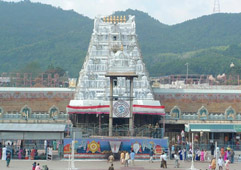
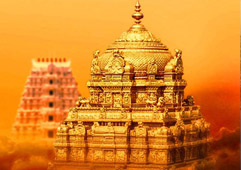
The temple construction style and the towering gopuram displays a unique example of the Dravidian architecture. Different dynasties adorned the structure with their offerings over the years bestowing the temple with innumerable intricately carved mandapams and doorways. The idol of Lord Venkateshwara is decorated with camphor and the devotees shave their heads as offerings to the lord.
The early morning prayers, known as the Subhprabhatam, start at 3 AM and continue throughout the day until the lord is laid to rest a little after midnight.
|
 |
|
| Festivities take place periodically when gifts are offered to the lord in Hundi, which is also the main source of income for the temple authorities. The nine day annual Brahmotsav festival is celebrated with great festivities every year in the month of September. |
| |
|